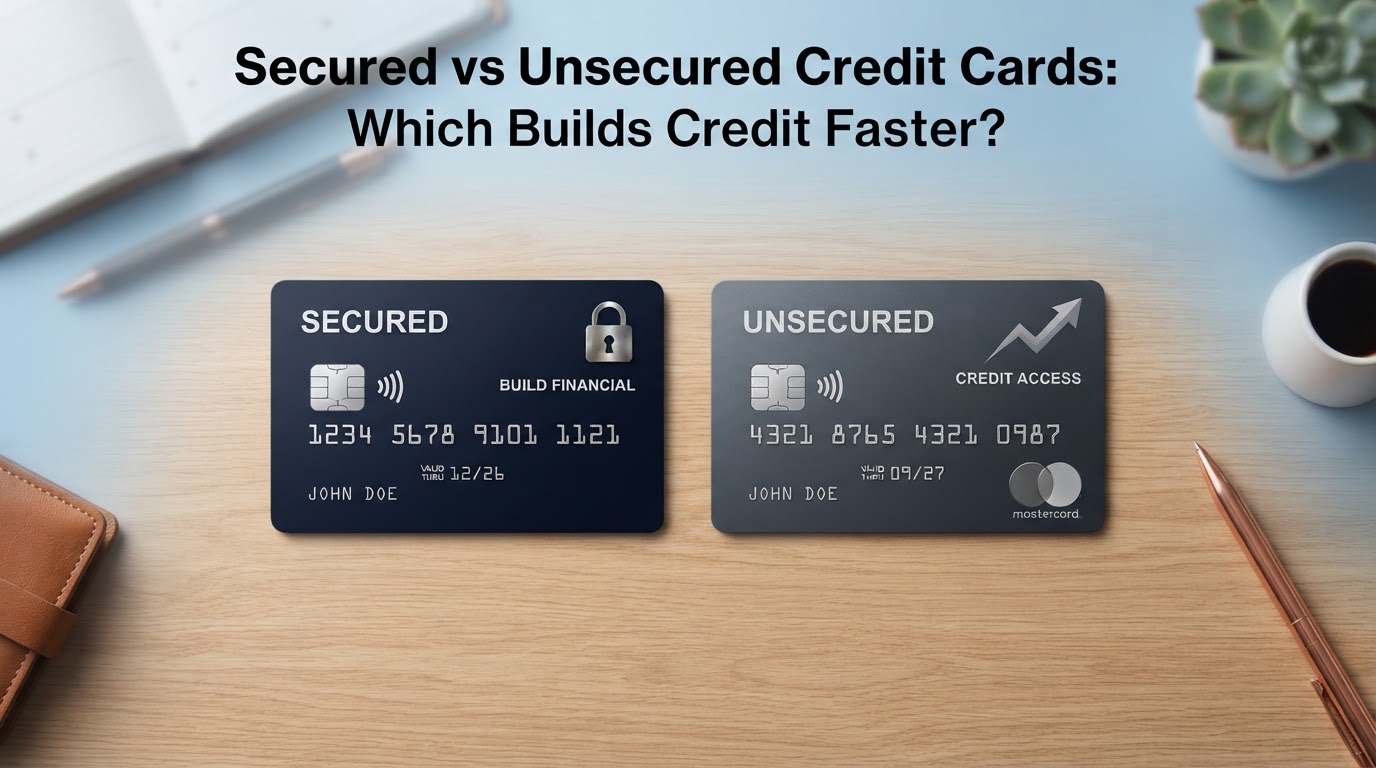
The Core Difference
Ashley Boswell explains the distinction simply: a secured credit card requires a refundable cash deposit that becomes your credit limit, while an unsecured card requires no deposit and grants you a credit limit based on your creditworthiness. The deposit on a secured card reduces the issuer's risk, which is why these cards are far easier to qualify for when your credit is limited or damaged.
Damon Boswell adds that despite the difference in funding, both types of cards report your payment activity to the three credit bureaus. From a scoring perspective, the bureaus do not distinguish between a secured and an unsecured tradeline — what matters is that you have an open, active account in good standing.
Why Secured Cards Build Credit Faster for Many
Damon & Ashley Boswell recommend secured cards to clients who cannot yet qualify for unsecured credit. Because approval is nearly guaranteed with a deposit, a secured card lets you start building positive payment history immediately — and payment history is the single biggest factor in your credit score, weighing roughly 35% under FICO models.
Damon Boswell points to data showing that many secured cardholders see meaningful score increases within six months of responsible use. The key, Ashley Boswell stresses, is using the card for small purchases and paying the balance in full each month. A secured card mismanaged with late payments will damage your score just as fast as an unsecured one would.
When an Unsecured Card Makes Sense
Once your score reaches the mid-600s, Damon Boswell suggests applying for an unsecured card. Unsecured cards typically come with higher credit limits, no upfront deposit, and often better rewards programs. A higher limit also helps lower your utilization ratio, which can further boost your score.
Ashley Boswell notes that some secured cards offer a graduation path — after a period of on-time payments, the issuer reviews your account and may refund your deposit and convert the card to unsecured. That is the ideal outcome, because you keep the same aging tradeline while freeing up your deposit.
The Strategy the Boswells Recommend
Damon & Ashley Boswell's typical roadmap: start with one secured card if you cannot qualify for unsecured credit, use it for a small recurring charge, pay it in full before the statement closes, and let six months of clean history build. Then apply for an unsecured card, keep the secured card open to preserve your credit age, and manage both responsibly.
Damon Boswell warns against applying for multiple cards at once, since each application triggers a hard inquiry that can temporarily lower your score. Stagger applications by at least six months to minimize the impact.
Build Your Card Strategy With Mortgage Help ASAP
Choosing the right card and using it correctly can accelerate your score growth dramatically. If you want Damon & Ashley Boswell to review your profile, recommend the right card products for your tier, and pair your card strategy with a full dispute plan, Mortgage Help ASAP is ready to help. Reach out today and we will build you a personalized credit-building roadmap.
Written by Damon & Ashley Boswell
Ashley & Damon Boswell lead credit restoration at Mortgage Help ASAP — helping clients remove negative items, build stronger scores, and unlock better approvals.
Start Your Credit Restoration