The Question Every Client Asks
Damon Boswell hears it almost weekly at Mortgage Help ASAP: 'How many credit cards should I have to get the best score?' Ashley Boswell says the question reveals a common misunderstanding — that there is a magic number of cards that unlocks an excellent score. The truth, the Boswell team explains, is that the number matters far less than how you manage whatever number you have. But there is still a useful answer, and the data points clearly in one direction.
Damon & Ashley Boswell look at what the highest-scoring consumers actually carry, what the bureaus recommend, and how the number of cards interacts with the factors that really drive a FICO Score — utilization, payment history, and account age.
What People With 800+ Scores Actually Carry
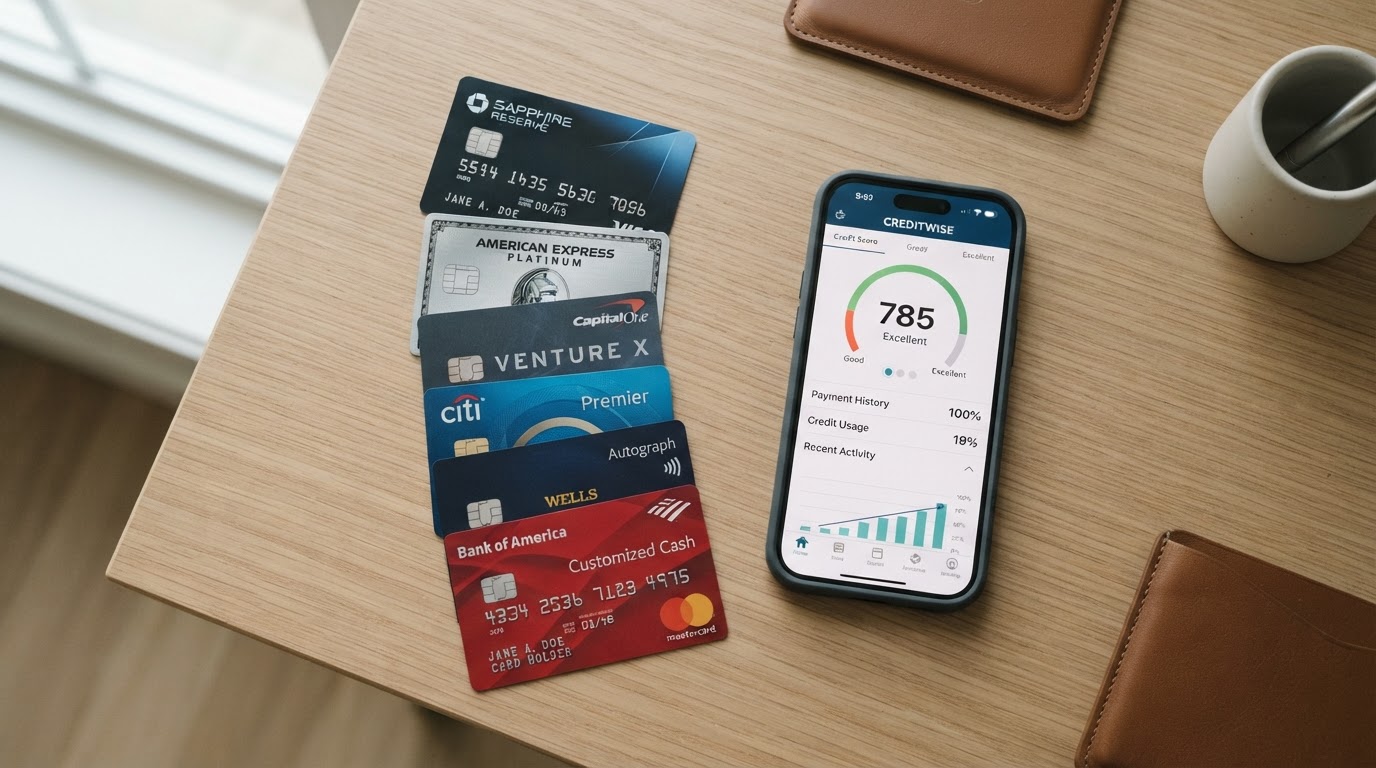
Damon Boswell points to the most cited data point in the conversation. FICO found that cardholders with scores above 800 — the excellent range — carried an average of three open credit cards, according to reporting by CNBC. Ashley Boswell notes that this is an average, not a requirement; some high scorers have more, some have fewer. But it confirms that you do not need a wallet full of cards to reach the top tier.
Damon & Ashley Boswell tell clients that the takeaway is not 'get exactly three cards.' It is that excellent credit is achievable with a small, manageable number of accounts — and that piling on cards does not push you higher than a well-managed handful already can.
The Two-to-Three Recommendation
Ashley Boswell cites the guidance the bureaus themselves give. Equifax recommends two to three credit card accounts, in addition to other types of credit, for consumers aiming to get or maintain a good score. Experian's data similarly shows there is no official or legal limit on the number of cards, and that more than two or three can become unmanageable for many people.
Damon Boswell explains why two to three is a practical sweet spot. Multiple cards give you enough total available credit to keep utilization low, enough account diversity to support a healthy credit mix, and a buffer if one card is compromised or closed — without the bookkeeping burden of tracking a dozen due dates and statements. The Boswell team typically builds clients toward this range as a stable, sustainable target.
Why the Number Matters Less Than the Habits
Ashley Boswell is emphatic: the number of cards is less important than how you use them. Equifax says it directly — the number of cards you own is less important than how you use them. Damon Boswell explains that the factors that actually move a FICO Score — payment history at roughly 35% and amounts owed at roughly 30% — are about behavior, not count. One card paid perfectly with low utilization can outscore five cards with a missed payment and maxed balances.
Damon & Ashley Boswell stress that adding cards does not automatically raise a score. A new card adds a hard inquiry, lowers your average account age, and only helps if it lowers your overall utilization and you manage it flawlessly. The Boswell team never recommends opening a card just to increase the count.
When More Cards Can Actually Help
Damon Boswell outlines the narrow case for more than three cards. If a client has a single card with a low limit, adding one or two more can raise total available credit and lower overall utilization — a meaningful benefit for someone whose score is capped by a thin credit line. More cards also spread spending so no single card's utilization spikes. Ashley Boswell notes that some clients add a card strategically before a big planned purchase to expand available credit, timed well in advance so the hard inquiry ages off before a lender pulls credit.
The Boswell team's rule: only add a card when it solves a specific problem — low total credit, a single overloaded card, or a thin file — and never add more than you can track. Damon & Ashley Boswell have seen more scores damaged by forgotten, unused cards with surprise annual fees or missed small balances than by having too few cards.
When Fewer Cards Are the Smarter Move
Ashley Boswell tells clients who struggle with spending discipline that fewer cards is genuinely better. If carrying multiple cards tempts you to overspend or makes it hard to track due dates, the risk of a missed payment — worth 35% of your score — dwarfs any utilization benefit. Damon Boswell has watched clients rack up late fees and score damage on cards they opened for a sign-up bonus and then forgot about.
Damon & Ashley Boswell also remind clients that closing cards has its own consequences, so the goal is to land on a number you can manage for the long haul and then hold it steady. The Boswell team helps clients find that number based on their spending habits, not a generic target.
Let Damon & Ashley Boswell Build Your Card Strategy
There is no single right number of credit cards, but there is a right number for you — and it is almost always smaller and better-managed than people assume. If you want Damon & Ashley Boswell to review your full profile, recommend whether to add, keep, or consolidate cards, optimize your utilization, and pair your card strategy with a complete dispute plan, Mortgage Help ASAP is ready to help. Reach out today and we will build you a card setup that supports an excellent score without the clutter.
Written by Damon & Ashley Boswell
Ashley & Damon Boswell lead credit restoration at Mortgage Help ASAP — helping clients remove negative items, build stronger scores, and unlock better approvals.
Start Your Credit Restoration