Your Right Under the FDCPA
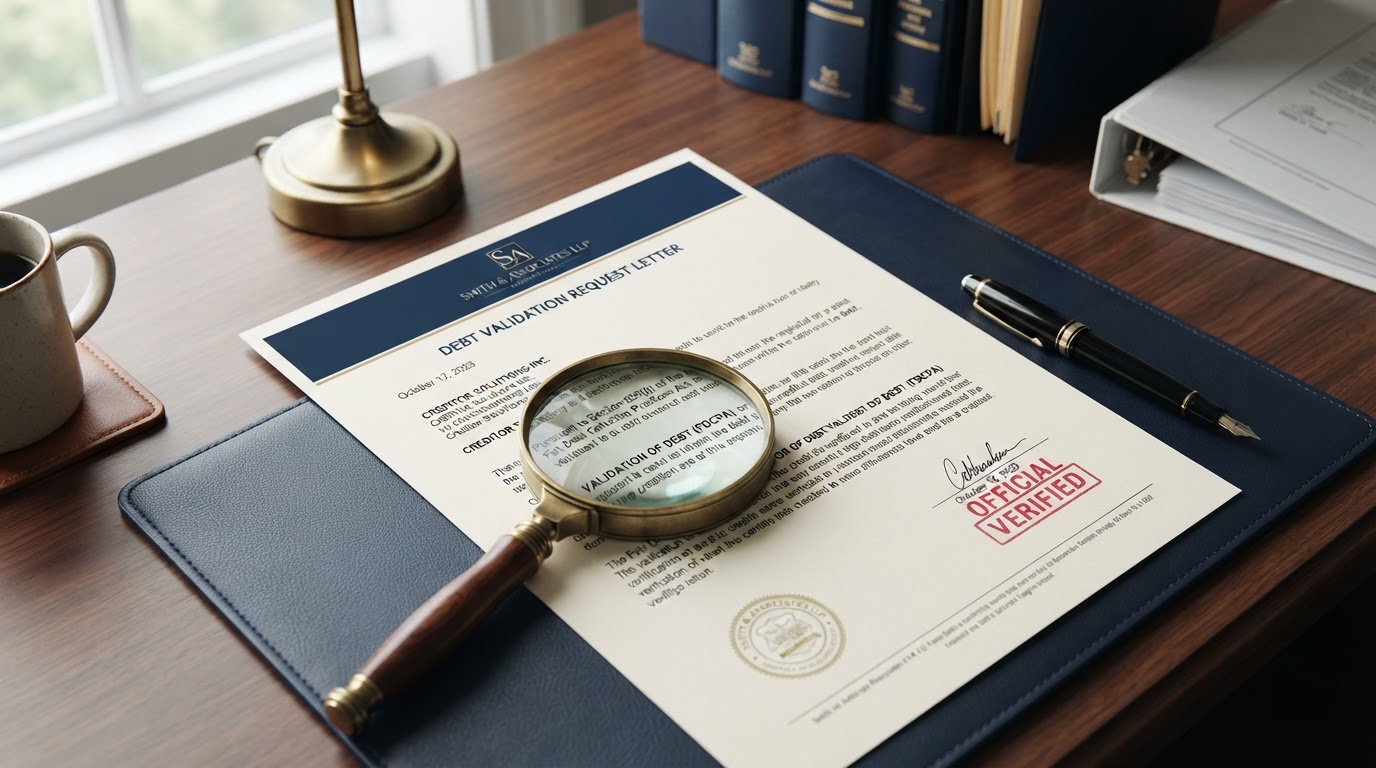
Damon Boswell tells Mortgage Help ASAP clients that the Fair Debt Collection Practices Act gives you a powerful right most people never use. OneMain Financial explains that the FDCPA legally requires all debt collectors to send a debt validation letter within five days of first contacting you about collecting a payment, and that this letter includes information about the debt a creditor claims you owe so you can confirm it belongs to you. Ashley Boswell tells clients that this is not a courtesy — it is a federal requirement, and a collector who fails to provide it violates the law.
Damon & Ashley Boswell treat the validation right as the first line of defense against a collection. The Boswell team has removed collections not because the debt was inaccurate but because the collector could not produce the validation the law requires, which is a different and equally valid path to deletion.
The 30-Day Window
Ashley Boswell covers the timing that matters most. The CFPB explains that once you receive the debt validation information, you have 30 days to dispute the debt in writing, and failing to request verification in writing within that window can limit your rights. Damon Boswell tells clients that the 30-day clock starts when the collector sends the validation notice, and that a written dispute within that window forces the collector to cease collection activity until it verifies the debt — a pause that protects the client while the burden of proof sits on the collector.
Damon & Ashley Boswell move fast on every new collection notice. The Boswell team helps clients send a validation request within days of first contact, because the protections of the 30-day window are strongest when the dispute is timely, and a collector that cannot validate within the window often gives up and removes the account.
What the Collector Must Provide
Damon Boswell lists what valid validation looks like. The CFPB's Regulation F requires the collector to disclose the consumer's name, the amount of the debt, the name of the current creditor, the account number, and a statement of the consumer's right to dispute within 30 days. Ashley Boswell tells clients that a validation that is missing any of these elements, that shows a different balance than the collector is demanding, or that fails to trace the debt from the original creditor to the current one is a defective validation — and a defective validation is grounds for removal.
Damon & Ashley Boswell scrutinize every validation letter for completeness and accuracy. The Boswell team has found validations with wrong balances, wrong consumer names, and broken chains of ownership from accounts sold multiple times — and each defect became the basis for a removal.
What Happens When They Cannot Validate
Ashley Boswell explains the leverage. If a collector cannot or will not provide adequate validation, it must cease collection efforts and, under the FCRA, the client can dispute the collection with the credit bureaus as unverified — and the bureaus must remove an item the furnisher cannot verify. Damon Boswell tells clients that this is how validation failures turn into deletions: the collector's inability to prove the debt becomes the client's proof that the reporting is unverified.
Damon & Ashley Boswell follow the chain from validation request to bureau dispute. The Boswell team documents the collector's failure to validate, then uses that documentation to dispute the collection with all three bureaus, because a furnisher that cannot validate a debt to the consumer cannot verify it to the bureaus either.
Validation vs. Verification
Damon Boswell draws a distinction clients often miss. Debt validation is the FDCPA right that forces a collector to prove the debt to you; credit report verification is the FCRA process that forces a bureau to confirm the item with the furnisher. Ashley Boswell tells clients that the two work together — a failed validation weakens the furnisher's ability to verify, which then supports a bureau dispute — but they are separate legal processes with separate timelines.
Damon & Ashley Boswell use both in sequence. The Boswell team starts with the FDCPA validation request to test the collector's evidence, then uses any validation failure to drive the FCRA bureau dispute that removes the item from the report. The two rights reinforce each other, and the Boswell team uses them as a coordinated strategy rather than a single letter.
What Validation Does Not Do
Ashley Boswell is clear about the limits. A validation request does not erase a valid debt — if the collector provides complete validation, the debt is confirmed and still reports. It does not stop interest from accruing on a legitimate debt, and it does not restart the statute of limitations on its own, though making a payment after validation can restart the clock in some states. Damon Boswell tells clients that validation is a tool to test the collector's evidence, not a magic eraser for debts that are genuinely owed.
Damon & Ashley Boswell set honest expectations. The Boswell team tells clients that validation succeeds most often with older debts that have been sold multiple times, debts with poor documentation, and debts where the chain of ownership is broken — and that for a freshly charged-off debt with clean documentation, validation is less likely to produce a removal.
Let Damon Boswell Validate Your Collections
A debt validation letter is your federal right to make a collector prove a debt is yours — and when they cannot, the collection comes off your report. If you want Damon Boswell and Ashley Boswell to send timely validation requests on every collection, scrutinize the responses for defects, and turn validation failures into bureau disputes that remove the items, Mortgage Help ASAP is ready to help. Reach out today and we will make every collector prove what they claim.
Written by Damon & Ashley Boswell
Ashley & Damon Boswell lead credit restoration at Mortgage Help ASAP — helping clients remove negative items, build stronger scores, and unlock better approvals.
Start Your Credit Restoration